
plateandledger.com

Categories
Margin Growth & KPI Mastery Mindset, Clarity & Financial Leadership Restaurant Accounting Foundations

Weekly Cash Forecasting That Actually Works for Restaurants

Most restaurant owners review cash only after a problem appears. By then, options are limited and decisions feel rushed.

Weekly cash forecasting replaces surprise with visibility. It gives operators time to adjust spending, prioritize payments, and protect liquidity.

In this article, we’ll explain how weekly cash forecasting works, what to include, and why it is one of the most effective financial habits a restaurant can build.

Month-end reporting is backward-looking.

Cash issues often develop mid-month when payroll, inventory, and vendor payments collide.

  • Beginning cash balance
  • Expected sales receipts
  • Payroll and tax payments
  • Vendor and rent obligations

This simple structure highlights pressure points early.

Cash forecasting does not require perfect accuracy.

Its value lies in showing trends and identifying weeks where cash tightens.

Frequent review creates accountability.

Managers become more thoughtful about spending, inventory ordering, and scheduling decisions.

Visibility improves communication.

Knowing upcoming cash needs allows leaders to plan payments without damaging relationships.

Lenders evaluate cash discipline.

Restaurants that forecast weekly demonstrate control and reliability.

Cash anxiety thrives in uncertainty.

Forecasting replaces fear with facts and urgency with intention.

Weekly cash forecasting is not complex — it is consistent. Restaurants that build this habit protect liquidity, make calmer decisions, and gain the confidence to grow deliberately.

Harvard Business Review. Cash flow forecasting fundamentals.
National Restaurant Association. Cash management best practices.
Restaurant365. Cash forecasting and reporting tools.


Categories
Access to Capital, Valuation & Exits Margin Growth & KPI Mastery Restaurant Accounting Foundations

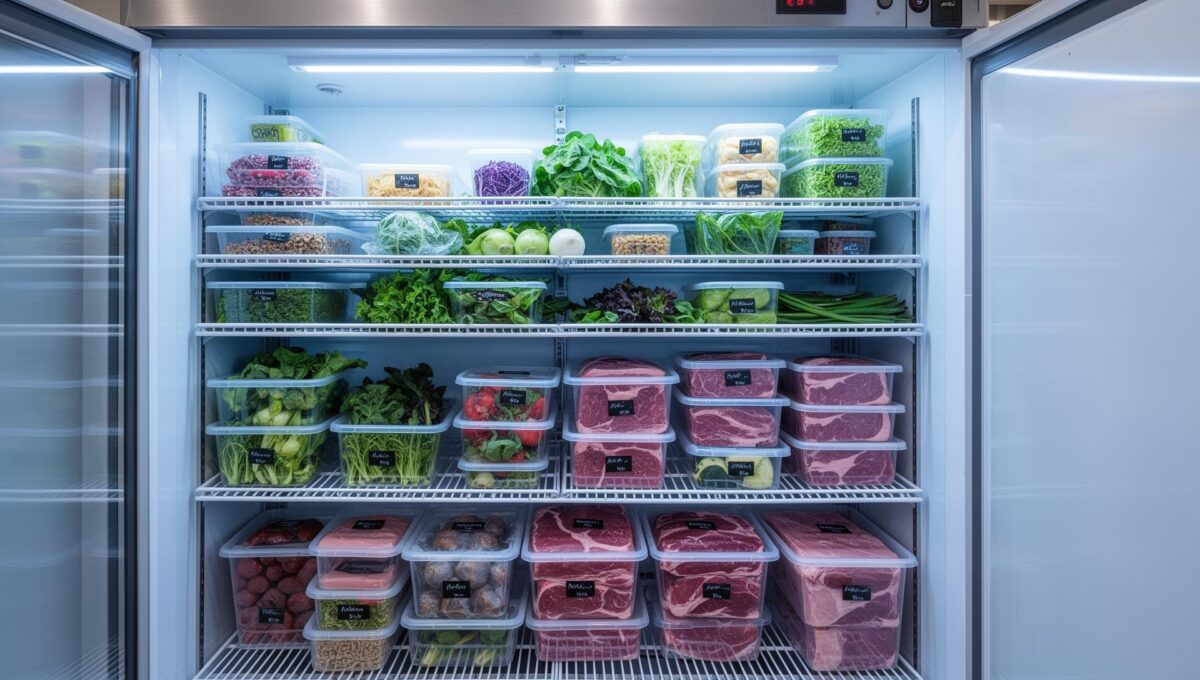
Inventory Is Cash Sitting on Shelves

Inventory rarely triggers urgency in restaurants. It sits quietly in coolers, freezers, and storage rooms.

But inventory represents cash that has already left the business. When inventory is mismanaged, liquidity disappears long before anyone notices.

In this article, we’ll explain why inventory should be treated as cash and how disciplined inventory management protects margins and cash flow.

Every inventory purchase converts cash into product.

Until that product is sold, the cash is unavailable for payroll, rent, or growth.

Excess inventory feels like preparedness.

In reality, it reduces flexibility, increases spoilage risk, and amplifies cash pressure.

Waste does not just affect food cost.

It represents cash spent with no opportunity for recovery.

Turnover measures how quickly inventory converts back into cash.

Slow-moving inventory ties up capital and hides operational inefficiencies.

Without accurate counts, decisions are based on assumptions.

This leads to reactive ordering, emergency purchases, and inconsistent margins.

Buyers examine inventory controls closely.

Strong inventory processes signal operational maturity and reduce perceived risk.

  • Regular cycle counts
  • Par level optimization
  • Integrated inventory and POS systems

These practices convert inventory from a blind spot into a controlled asset.

Inventory chaos creates financial anxiety.

Clear data and consistent processes allow leaders to manage inventory calmly and intentionally.

Inventory is not just an operational concern — it is a cash management strategy. Restaurants that treat inventory as cash protect liquidity, stabilize margins, and create businesses that can grow without strain.

Harvard Business Review. Inventory and working capital management.
National Restaurant Association. Inventory control best practices.
Restaurant365. Inventory tracking and turnover analytics.

Categories
Access to Capital, Valuation & Exits Margin Growth & KPI Mastery Restaurant Accounting Foundations

Working Capital Mistakes That Starve Restaurants of Cash

Many restaurants experience cash stress even when the P&L looks healthy. The issue is often not profitability — it’s working capital.

Working capital determines how quickly cash flows in and how slowly it flows out. Small inefficiencies compound into persistent liquidity pressure.

In this article, we’ll highlight the most common working capital mistakes restaurants make and explain how disciplined operators regain control.

Cash inflows and outflows rarely move at the same speed.

Payroll and vendors are paid on fixed schedules, while sales receipts may lag due to payment processors or catering terms.

Inventory is cash that hasn’t been sold yet.

Overordering ties up capital, increases spoilage risk, and reduces financial flexibility.

Payment terms are a financing tool.

Failing to negotiate or track vendor terms forces restaurants to fund operations with their own cash.

Without forecasting, cash shortfalls feel sudden.

Weekly cash visibility allows leaders to plan proactively instead of reacting under pressure.

Growth consumes working capital.

Higher sales require more inventory, more labor, and more upfront cash.

Buyers and lenders examine cash conversion closely.

Businesses with efficient working capital cycles require less external funding and carry lower risk.

  • Weekly cash forecasting
  • Inventory optimization
  • Clear vendor payment policies

These practices stabilize liquidity and reduce financial stress.

Cash stress thrives in uncertainty.

When leaders understand their working capital cycle, decisions slow down and improve.

Working capital is not an accounting concept — it is the lifeblood of daily operations. Restaurants that manage it intentionally protect cash flow, preserve flexibility, and position themselves for sustainable growth.

Harvard Business Review. Working capital management.
National Restaurant Association. Cash flow best practices.
Restaurant365. Cash forecasting and liquidity tools.

Categories
Margin Growth & KPI Mastery Mindset, Clarity & Financial Leadership Restaurant Accounting Foundations

Why Top-Line Growth Can Be Dangerous for Restaurants

Growth is often treated as the ultimate measure of success in restaurants. Rising sales feel like validation that the business is working.

But revenue growth without margin discipline can quietly increase risk. More volume amplifies inefficiencies instead of solving them.

In this article, we’ll explain why top-line growth can be dangerous and how profitable restaurants pursue growth intentionally.

Sales dollars are not interchangeable with earnings.

Higher revenue increases food, labor, and operating costs before it improves profitability.

Not all sales contribute equally.

Low-margin items and promotions consume working capital while delivering little profit.

Growth stresses systems.

Weak scheduling, pricing errors, and training gaps become more expensive at higher volumes.

Discounts feel like growth tools.

Without contribution margin analysis, they often trade profitability for temporary volume.

Revenue growth often precedes cash receipts.

Payroll timing, inventory purchases, and vendor terms can strain liquidity during expansion.

Healthy growth is selective.

Profitable restaurants expand items, channels, and locations that strengthen margins and cash flow.

When leaders understand contribution margin and cash flow, growth decisions become strategic rather than emotional.

Clarity replaces urgency with intention.

Revenue growth is not the goal — profitability and durability are. Restaurants that respect margin, cash flow, and system readiness grow businesses that last.

Harvard Business Review. Revenue growth and profitability.
National Restaurant Association. Financial performance benchmarks.
Restaurant365. Margin and growth analytics.

Categories
Margin Growth & KPI Mastery Mindset, Clarity & Financial Leadership Restaurant Accounting Foundations

Contribution Margin vs Food Cost: What Actually Drives Restaurant Profit

Food cost percentage is one of the most commonly tracked restaurant metrics. It’s familiar, intuitive, and easy to calculate.

But focusing on food cost alone often leads restaurants to make the wrong decisions. Profitability is driven not by percentages, but by dollars.

In this article, we’ll explain the difference between food cost and contribution margin, and why contribution margin is the metric that actually determines restaurant profit.

Food cost percentage measures ingredient cost relative to price.

It helps identify waste, portion control issues, and purchasing inefficiencies.

Food cost percentage ignores volume and labor.

An item with a low food cost but low price may contribute very little toward covering fixed costs.

Contribution margin measures how much money remains after food cost to cover labor and overhead.

It answers the question: How much does this item actually contribute to profit?

High-contribution items fund the business.

They absorb labor costs, offset lower-margin items, and stabilize cash flow.

Two items can both have a 30% food cost but dramatically different contribution margins based on pricing and portion size.

Contribution margin reveals menu opportunities.

Pricing, placement, and promotion decisions should prioritize items that deliver dollars, not just percentages.

Accurate contribution analysis depends on clean data.

Consistent recipes, reliable inventory tracking, and timely financials are essential.

When operators see profit in dollars, decision-making becomes calmer and more strategic.

Contribution margin replaces intuition with intention.

Food cost percentage is a diagnostic tool. Contribution margin is a decision-making tool. Restaurants that shift their focus gain control over pricing, menu design, and long-term profitability.

National Restaurant Association. Menu profitability analysis.
Harvard Business Review. Contribution margin fundamentals.
Restaurant365. Menu engineering and margin analytics.

Categories
Margin Growth & KPI Mastery Mindset, Clarity & Financial Leadership Restaurant Accounting Foundations

Menu Pricing Mistakes That Quietly Destroy Restaurant Margins

Most restaurant pricing problems are not caused by one bad decision. They result from small assumptions that go unchallenged over time.

Because pricing feels customer-facing and emotional, many operators avoid revisiting it — even as costs rise and margins compress.

In this article, we’ll break down the most common menu pricing mistakes that quietly erode profitability and explain how disciplined operators correct them.

Food cost percentage is only part of the story.

Two items with identical food cost percentages can produce very different contribution margins.

Contribution margin measures how much each item contributes to covering labor and overhead.

Menus optimized for contribution margin protect profitability even when volumes fluctuate.

Ingredient and labor costs rarely stay flat.

Menus that remain static while costs rise absorb margin compression silently.

Popular items often carry pricing opportunity.

When demand is strong, modest price adjustments rarely impact volume but materially improve margin.

Discounts feel tactical.

Without measuring contribution margin post-discount, promotions can reduce profitability despite higher sales.

Menu engineering reveals behavioral patterns.

Understanding which items are stars, plowhorses, puzzles, or dogs allows operators to price and position items intentionally.

Pricing reflects confidence.

Leaders who understand their numbers price with clarity instead of fear.

Well-priced menus create flexibility.

They allow restaurants to absorb cost volatility without constant reactive changes.

Pricing mistakes rarely announce themselves. They compound quietly. Restaurants that revisit pricing with discipline protect margins, strengthen cash flow, and regain control of profitability.

National Restaurant Association. Menu pricing and profitability.
Harvard Business Review. Pricing strategy fundamentals.
Restaurant365. Menu engineering and contribution margin insights.

Categories
Margin Growth & KPI Mastery Mindset, Clarity & Financial Leadership Restaurant Accounting Foundations

Training as a Financial Investment, Not an Expense

Training is often one of the first line items scrutinized when margins tighten. Many restaurants treat training as a discretionary expense rather than a value driver.

In reality, training has a measurable financial return. When done well, it improves productivity, reduces turnover, and stabilizes margins.

In this article, we’ll explain why training should be viewed as a financial investment — and how disciplined restaurants capture its return.

Well-trained teams perform tasks faster and with fewer errors.

Improved execution increases sales per labor hour and reduces costly rework.

Employees stay longer when expectations are clear.

Structured onboarding and ongoing training create confidence and engagement.

Training creates repeatable execution.

Consistent service and product quality drive repeat visits and brand trust.

Without training systems, leaders become bottlenecks.

Documented processes and role clarity reduce reliance on constant supervision.

  • Sales per labor hour improvement
  • Reduction in turnover rates
  • Fewer operational errors and comps

Tracking these metrics ties training directly to financial outcomes.

Reducing training saves money briefly.

Over time, it increases labor inefficiency, turnover, and inconsistency — all of which cost more than training ever did.

Training creates alignment.

When teams understand expectations, leaders spend less time correcting and more time guiding.

Training is not a cost to minimize. It is an asset that compounds over time. Restaurants that invest in training build stronger teams, healthier margins, and businesses capable of sustainable growth.

National Restaurant Association. Training and development resources.
Harvard Business Review. Employee development and productivity.
Restaurant365. Workforce analytics and performance insights.

Categories
Margin Growth & KPI Mastery Mindset, Clarity & Financial Leadership Restaurant Accounting Foundations

The True Cost of Restaurant Turnover (And Why It’s Underestimated)

Turnover is often treated as a staffing inconvenience. In reality, it is one of the most expensive problems restaurants face.

Because turnover costs are spread across training time, lost productivity, and management effort, they rarely appear clearly on a P&L.

In this article, we’ll break down the real financial cost of turnover and explain why reducing churn is one of the fastest ways to protect margins.

Most turnover costs are indirect.

They show up as overtime, lower sales per labor hour, training inefficiencies, and management distraction.

  • Recruiting and hiring expenses
  • Onboarding and training wages
  • Uniforms and onboarding materials

These costs repeat with every departure.

  • Lower productivity from new hires
  • Increased overtime for coverage
  • Inconsistent guest experience

These impacts compound across teams and time periods.

High turnover consumes leadership attention.

Time spent hiring and retraining reduces focus on growth, systems improvement, and financial oversight.

Buyers and lenders view turnover as risk.

Unstable teams signal weak systems and reduce confidence in scalability.

Retention is not just an HR goal.

  • Predictable schedules
  • Clear training pathways
  • Consistent leadership communication

Small improvements in retention often deliver outsized financial returns.

Turnover thrives in chaotic environments.

Clear expectations, consistent processes, and visible metrics create stability that teams stay for.

Turnover is not inevitable. Restaurants that understand its true cost treat retention as an investment — one that protects margins, culture, and long-term enterprise value.

National Restaurant Association. Workforce retention resources.
Harvard Business Review. Employee turnover and productivity.
Restaurant365. Labor analytics and retention strategies.

Categories
Margin Growth & KPI Mastery Mindset, Clarity & Financial Leadership Restaurant Accounting Foundations

Overtime Creep: How It Starts and How Restaurants Can Stop It

Most restaurants don’t plan to overspend on labor. Overtime problems rarely begin as intentional decisions.

Instead, overtime builds slowly — a longer shift here, a coverage gap there — until labor costs feel permanently elevated.

In this article, we’ll explain how overtime creep starts, why it’s so hard to notice in real time, and how disciplined systems help restaurants stop it.

Overtime usually appears incremental.

A few extra hours per employee may feel insignificant, but across a full team those hours compound quickly.

  • Chronic understaffing during peak periods
  • Last-minute schedule changes
  • Overreliance on a few high-performing employees
  • Poor visibility into hours worked week-to-date

These behaviors often feel operationally necessary, but they carry real financial consequences.

Overtime inflates labor cost without increasing productivity proportionally.

Sales per labor hour decline, and margin targets become harder to hit — even when sales remain strong.

Overtime is best managed before payroll is finalized.

Weekly labor reviews allow managers to adjust schedules, rebalance shifts, and prevent small overages from becoming structural.

The goal is not to punish overtime — it’s to design systems that reduce the need for it.

  • Clear scheduling thresholds
  • Cross-training to improve coverage
  • Early intervention when hours trend high

When guardrails are clear, managers make better decisions under pressure.

Persistent overtime often signals deeper issues.

Scheduling habits, staffing models, and communication breakdowns all surface through overtime trends.

Stress-driven decisions drive overtime.

When leaders have visibility into labor performance, they respond with intention instead of urgency.

Overtime creep is not a staffing failure — it’s a systems signal. Restaurants that address overtime early protect margins, support teams, and regain control of labor costs.

National Restaurant Association. Labor cost control resources.
Harvard Business Review. Workforce productivity and scheduling.
Restaurant365. Labor tracking and overtime management best practices.

Categories
Margin Growth & KPI Mastery Mindset, Clarity & Financial Leadership Restaurant Accounting Foundations

Scheduling for Profit: Aligning Labor With Demand

Labor is the largest controllable cost in most restaurants. Yet scheduling is often driven by habit, availability, or intuition rather than data.

When staffing levels don’t match demand, restaurants experience margin erosion, team burnout, and inconsistent guest experience.

In this article, we’ll explain how profitable restaurants use scheduling as a financial tool — not just an operational task.

Every hour scheduled has a cost and an expected return.

Scheduling determines labor efficiency, service quality, and ultimately contribution margin.

Most restaurants have repeatable demand cycles.

  • Day-of-week traffic patterns
  • Time-of-day volume shifts
  • Seasonality and local events

Ignoring these patterns leads to overstaffing or understaffing — both of which are costly.

Overstaffing increases labor percentage without increasing sales.

Understaffing reduces throughput, hurts guest satisfaction, and leads to lost revenue opportunities.

Effective scheduling starts with sales expectations.

Historical sales data, promotions, and known events should inform labor plans.

  • Labor cost as a percentage of sales
  • Sales per labor hour
  • Productivity by role

Weekly review of these metrics allows managers to adjust quickly.

Predictable schedules improve retention.

When labor planning is thoughtful, teams experience less chaos and burnout.

Scheduling pressure often stems from uncertainty.

Clear expectations and data-driven decisions allow leaders to schedule confidently without second-guessing.

Scheduling is not about cutting hours. It’s about aligning resources with reality. Restaurants that schedule for profit protect margins, support teams, and deliver consistent guest experiences.

National Restaurant Association. Labor management resources.
Harvard Business Review. Workforce planning and productivity.
Restaurant365. Labor forecasting and scheduling best practices.